NAGT's newsletter, "In the Trences" (January 2019, Vol 9(1) ) has a few articles on field trips in geoscience education.
Tarin Weiss from Westfield State University starts off by noting that field trips are common in college geoscience, and that during the recession K--12 field trips had a big drop off (around a third) from normal. So there's instantly a rationale for having trips in the first place ("colleges do it") and a rationale for promoting them ("schools are willing to cut them easily'). Interestingly schools not only eliminated field trips, but then replaced them with test prep activities. THat sounds like there's more than just a cost consideration going on, if it was just the cost of field trips then the schools might replace trips with normal classroom time. Perhaps test prep is just taking everything over whenever it gets the oppurtunity.
They're advocating for college geoscience instructors to in effect curate field trip sites and activities and then go out to the schools to recruit teachers to have their classes particpate in the trips. Trips can be field locations or museums. To that end they place field trips with the concept of place based education and the Next Generation Science Standards.
They also note a few times that field trips need to be accessible for students with different physical abilities, and suggest that virutal trips and/or activieis in more accessible parts of a park/location have to be considered.
As for the point of the field trip, they not that students should be, like researchers in the field, observing new things that become a problemt to be solved. So this impllies needing a preceding framework that the new observation creates a problem with. They go on to not that there need to be pre-trip and post-trip activities to frame questions and get this framework.
They recommend three to four learning goals within a trip and conclude that the purpose of a field trip is to construct explanations about the natural world, so again an explanation is a thing that deals with a problem for a given framework.
Among the citations is a reference to a study on NYC schools using Museums like the AMNH for field trips, and how that correlates with test scores; Whitesell 2015, "A Day at the Museum: The Impact of Field Trips to Informal Science Education Instutions on MIddle School Science Achievement", NYU's Institute for Education and Social Policy Working paper #03-15. This worker looked at six years worth of student data at 200 schools. Their main positive result is a broad statistically significant ~1% increased likeliehood of science exam proficiency. Apparently there hasn't been all that much quantitative and large sample work done on relating the number of science field trips to test scores.
Along the lines of virtual field trips, this issue has an article showing how students build up 3D immersive trips and locations from Frank Granshaw at Portland State. Making the VR site itself is a project, but then the completed site can be used by incomming students to prepare for field activities. They refer ot the product as a Virtual Field Experience (VFE).
The popularity of VR/Augmented reality at the consumer level has made it a little easier to accomlish this, education lags industry. This despite the large amount of educational interst in VR and the use of VR for even UNESCO meetings.
The author primarily discusses Holobuilder, which uses the Ricoh Theta panoramic camera. Holobuilder is apparently a construction/real estate focused company that uses these cameras, sometimes left in place/streaming, to document site construction. Projects at the PDX campus include the creation of VFE for a biology/geology community college field course at a trail along an estuary; fir undergrads in a sustainability and climate courses creating VFEs of urban farms; Middle School students doing a summer science camp on a section of a stream, including micro-photographs of collected diatoms (including SEM photos); and virtual tours of monitoring sites.
Immediately a lot of this fits right into our capabilities; SEM, civic engagement; site monitoring; urban farms. Many of their products are 360 panoramas at trail waypoints, linked to a GIS map, where you can clicked markers to move between waypoint, and while at a point clink on floating links to get more information, like this one in Germany. The interaction for a user than can be through a webbrowser on a site hosted by the college. Holobuilder is what allows them to do that--- integrating with GIS, putting up clickable data, or even splitting the screen to show the location at different dates---very easily.
Some of the VFEs are more involved that others, this one not only shows a view, but is linked up more detailed notes/instruction, and allows measurements, including using a 'virtual clinometer'.
They do caution that when they started doing VFE's in 2013, there was a large amoung of instructor work required; students would collect photos and panormas and 360sphere photos, but the instructor would end up having to stitch sites together out of the field. But now in 2019 using Holosuite's plans, the site assembly can take place entirely in the field.
Wednesday, February 13, 2019

Monday, August 01, 2016
Field Notes Digitzation
Together with another student in the CUNY Graduate Center, I was able to get a grant from the Provost"s Digital Initiatives Grant. This grant allows us to start something exciting, the digitization of the notes taken by scientists in the field.
There's a few jsutifcations for this type of project. On the one hand, field notes are an important part of thproduction of science. Workers record observations ---actual data--- in their notebooks and use that later on to produce scientific ideas and publications. Nearly everything else we do is heavily computerized and digitized, But taking an iPad out to a field station is very rarely a realistic option. If it's not clear why, field sites are often remote, with no electricity and no connectivity. Field sites are also often harsh, without proper shade; high temperatures; extremely high humidity, all things that can wear on electronics. Despite that however most of us still take our cell phones into the field. But paper and pen, that's a technology that continues to stand up to the field environment. Field notes are also a pastiche of what in the digital world are multiple types of media: sketches of an outcrop; maps of field sites; tables of data; lists of GPS coordinates; alongside spontaneously recorded blocks of text. Most digital solutions to this mixture of media are simply replications of paper and pen notes on a screen. Digital pens reverse the process of digitization; they insert digitzation into our already existing processess.
But why digitize at all? Digitizating your field notes creates a back up of them. Most of us do this by photocopying and scanning the pages in our notebooks. This is a timeconsuming nuissance that sometimes still produces unreadable sections of our notes. Some people go so far as to cut out the spine outof their notebooks in order to make scanning easier. With a digital pen, the only extra work to produce a visual backup of your notes is turning syncing to your phone or simply turning on your phone and opening an app before writing. This alone makes the digitiation of field notes through smart pens worth investigating. As long as pen system can be found that fits into research budgets; that produces accurate renditions of handwritting; and that is manageable and portable, you've got something worth investigating and potentiallyy incorporating.
But I think smart pens offer us a lot more than redundant back ups. They make field notes shareable. Even if you previously had a set of scanned pages from your notebook, sharing them can be difficult. The files tend to be large if they're high quality. You may've scanned to PDF or TIFF, and that decision may've dependded on the scanner you were using. Whoever you want to send the files too may need you to make the files smaller, or even the email program their campus uses may require that! And if you didn't bundle every page together, that'd mean you have to batch resize every file. A digital pen system should manage your files, it should let you send entire notebooks or ranges of pages in a choice of formats
If another worker, or you yourself, want to search for a particular passage or subject in your notes, digitzation has tremendous potential to aid in that. When I use a notebook, I put a table of contents or index in the first few pages and I add to it over time. That's how most of us make our notes "searchable". Really important things I flag with a post-it type of sticker. Usually I put a header on each page. When I really start getting desperate I'm drawing stars, using highlighers, or anything to make a page stand out; because more often than note when I'm searching through a notebook I'm flipping through the pages quickly and need something jarring to make a page or passage stand out. A digital system should be able to do that and expand beyond it. A digital system should handle indices and tags, but also should make note searchable from the start. When we're evaluating these systems, handwriting recognition and searchability are prime criteria.
Not all field notes are spontaneous. A lot of field notes are very patterned and regular: you're measuring or estimating the size, colors, rock types, strike and dip of beds at an outcrop, thickness of beds, etc. Or you're recording the location, body mass, length, species, and sex of a dozens of living specimens at multiple locations. We're doing that because this data will be used later on. We're building databases from our notes. For most of us this means getting back from the field, to our labs and computerrs, cracking open our notebooks, marveling at the amount of dust they've taken in, and then entering by hand all of the data. Sometimes we're lucky enough to have junior lab workers that can be assigned this tasks, and often we're the more junior worker that get's assigned it. With smart pens we should be able to save time, by writing the notes we should be also be generating text that can then be copied as a whole into a database. In fact we should be able to have that entire process automated. And if we have some connectivity at our field locations, we should practically be able to build databases in real time or nightly. But one thing that should be apparent in academia is that saving time often isn't much of a draw. What does the PI care if a digital process saves a student's time? Well one added benefit of digitization is that it can result in less errors. The data entered into fields can be set to be numbers, text, or a mix of both, just like in a spreadsheet. This prevents the handwriting recognition system from mistaking a "7" for an "h" or something along those lines. Or it can at least throw a flag up for a human to review when it hits a contradiction like that. It also allows for errors to be addressed while there is still someone in the field. Even with a notebook alone, there can be confusion about what's recorded. If it's months later, even the person who took the notes can be unsure of what they were recording and why. Having the people back at the lab able to contact a field worker while on location can clear up errors and make us more confident in our decisions regarding how we've resolved errors.
There are a few other possibilities and abilities that digitzed notes offer beyond handwritten notes. By having searchable text, the frequency and co-occurence of words can be tabulated and studied. This potentially can tell us something about how a worker learns about their field site. Perhaps there are differences in word occurence between people new to the location and others who are experts about the field site? Perhaps there's a difference, or similarity, between expert scientists and expert non-scientists about the site. Those are more distant possibilities for this project. At the moment, we're just trying to figure out what digital processes and practices work best for a variety of scientific fields.
Wednesday, May 18, 2016
Dangerous Fieldwork
We've known for a long time that scientific fieldwork can be dangerous. Roy Chapman Andrews was attacked by bandits for example. And for women, it's been publicly known for a few years now that there is massive harassment, by their scientific colleagues, in the field (and the lab, and the classroom, and the rest of academia. Yikes.).
But the foreign government allowing the research in the first place? They're not supposed to represent much of a physical danger. Yet here we have a researcher, 28 year-old Cambridge PhD student Giulio Regeni, who was apparently tortured and killed by the security apparatus of "President" Sisi in Egypt. Sisi came to power in what amounted to a counter-democratic coup. The longtime Egyptian dictator Hosni Mubarak resigned after public protests over his reign, and Mohammed Morsi, a member of the Muslim Brotherhood political party, was elected afterwards. The Egyptian military ultimately balked at this, initiated a coup, and used a tremendous amount of violence (killing more than 800 people in one instance) to suppress not only the Muslim Brotherhood but any dissent.
So perhaps it shouldn't be surprising to learn that they kidnapped him, burnt and tortured him, and ultimately killed him. In addition to the plain old evilness of this regime, it shows that the Sisi government is not really thinking about researchers in Egypt. It should be obvious that there's a tremendous amount of field and other research going on in the land of the Pharaohs & Fatimids. Also recall that the dinosaur Spinosaurus aegypticus was first discovered there, and that the Fayum is an amazing and important primate fossil site. There's a huge number of researchers there, in fact there's entire field schools that operate under this same government and security apparatus.
But the foreign government allowing the research in the first place? They're not supposed to represent much of a physical danger. Yet here we have a researcher, 28 year-old Cambridge PhD student Giulio Regeni, who was apparently tortured and killed by the security apparatus of "President" Sisi in Egypt. Sisi came to power in what amounted to a counter-democratic coup. The longtime Egyptian dictator Hosni Mubarak resigned after public protests over his reign, and Mohammed Morsi, a member of the Muslim Brotherhood political party, was elected afterwards. The Egyptian military ultimately balked at this, initiated a coup, and used a tremendous amount of violence (killing more than 800 people in one instance) to suppress not only the Muslim Brotherhood but any dissent.
So perhaps it shouldn't be surprising to learn that they kidnapped him, burnt and tortured him, and ultimately killed him. In addition to the plain old evilness of this regime, it shows that the Sisi government is not really thinking about researchers in Egypt. It should be obvious that there's a tremendous amount of field and other research going on in the land of the Pharaohs & Fatimids. Also recall that the dinosaur Spinosaurus aegypticus was first discovered there, and that the Fayum is an amazing and important primate fossil site. There's a huge number of researchers there, in fact there's entire field schools that operate under this same government and security apparatus.
Tuesday, May 17, 2016
Luwians the Trojan War and wannabe Schliemanns
Schliemann was the famous discoverer of Troy, who made the possibility of it's fabled Trojan War seem a little more realistic. He bucked the authorities and the prevailing knowledge of his time.
So, ever since his discovery, people have tried to emulate him. In fact this isn't really something that was brought about by Schliemann's success; people certainly claimed to be rebel scientists before even Galileo was around. Schliemann particularly comes up here because of this article interesting and highly critical article from Jason Colavito:
http://www.jasoncolavito.com/blog/swiss-geoarchaeologist-claims-lost-luwian-civilization-caused-the-bronze-age-collapse-and-the-trojan-war
There Colavito discusses Eberhard Zangger's idea that Troy, and it's fall, is the ground-source for the Atlantis mythos. Zangger ties this Atlantis-via-Troy idea up with 'secret and suppressed history' and ancient lines of kinds. So Aeneas meets the Davinci Code I guess.
Here's Zangger's site promoting the idea. The other thing that gets distorted here is that the Luwian language---a real thing---is blown up into 'the Luwian people' These Luwians are part and parcel of the fall of Troy. Except they didn't exist. It's a language, but not a people, not like, say, German or Hittite, which were both languages and peoples.
This is an odd thing that lots of people seem to do, assuming a language group also represents an ethnic people and a culture. This isn't the case now, you don't need to be an Anglo practising the English culture just because you speak English. More people today speak English as a second language than as a primary language too. In the past this sort of thing would've also happened. So lots of people could be Luwian speakers without being 'the Luwians'.
So the Luwians, apparently, didn't do it.
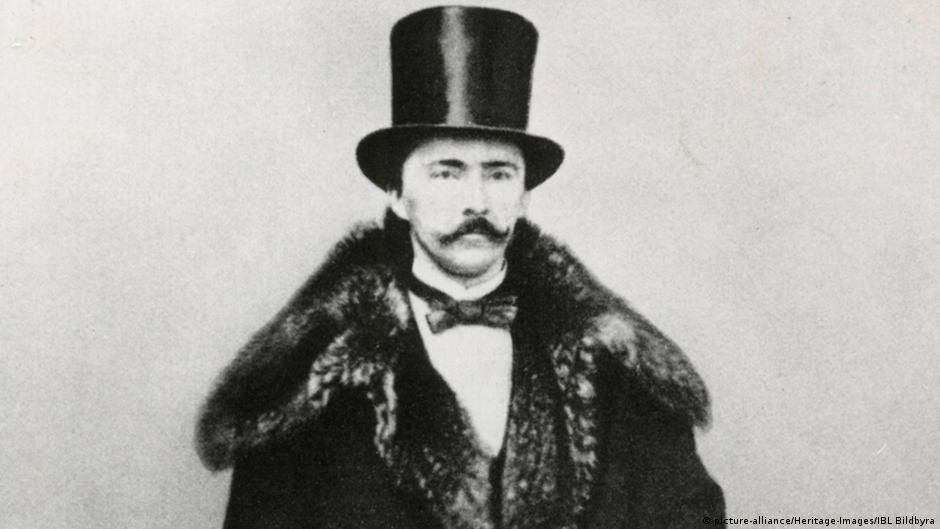 |
| Also a straight up pimp? |
http://www.jasoncolavito.com/blog/swiss-geoarchaeologist-claims-lost-luwian-civilization-caused-the-bronze-age-collapse-and-the-trojan-war
There Colavito discusses Eberhard Zangger's idea that Troy, and it's fall, is the ground-source for the Atlantis mythos. Zangger ties this Atlantis-via-Troy idea up with 'secret and suppressed history' and ancient lines of kinds. So Aeneas meets the Davinci Code I guess.
The Luwians did it?
Here's Zangger's site promoting the idea. The other thing that gets distorted here is that the Luwian language---a real thing---is blown up into 'the Luwian people' These Luwians are part and parcel of the fall of Troy. Except they didn't exist. It's a language, but not a people, not like, say, German or Hittite, which were both languages and peoples.
This is an odd thing that lots of people seem to do, assuming a language group also represents an ethnic people and a culture. This isn't the case now, you don't need to be an Anglo practising the English culture just because you speak English. More people today speak English as a second language than as a primary language too. In the past this sort of thing would've also happened. So lots of people could be Luwian speakers without being 'the Luwians'.
So the Luwians, apparently, didn't do it.
GIS or Lidar experience?
Got an undergrad degree in Geology?
Have at least a year's worth of grad coursework in GPS (and didn't end up in a lake?) and/or LIDAR and the like?
Then apply for this USGS job in California. The work involves GIS and mapping in a science center.
The listing closes in about a week.
https://www.usajobs.gov/GetJob/ViewDetails/437878400/
Have at least a year's worth of grad coursework in GPS (and didn't end up in a lake?) and/or LIDAR and the like?
Then apply for this USGS job in California. The work involves GIS and mapping in a science center.
The listing closes in about a week.
https://www.usajobs.gov/GetJob/ViewDetails/437878400/
Sunday, June 07, 2015
Surprising space limitations
I bought a new 1Tb portable, external (and "shock proof") USB3.0 hard drive a little while ago. But I've already got so many CT scans and 3D model objects that it's filling up. At the moment I only have one set of CT stacks and models (which are then backed up). I don't like the idea of having a small 'working set' of objects and CT scan tiff stacks on my portable drive and then another set backup to a few places. For the CT stacks I guess that can work, since they don't normally need to be edited; new stacks can just be deposited and the stack collection can accumulate over time. But for the models that's definitely not a good idea, I'd very quickly start loosing track of what was "in" each model. I'd think that the only way to deal with that is with some sort of model version control system, which in some ways would be nice, but that's an entire area that I don't think I can even look into at this point, and while models don't take up as much space as CT-stacks, they're not small either.
I think for the duration of the PhD I can stick with a portable drive that has all my data, CT stacks, and objects, but after that I'll almost certainly have to start splitting things up. Right now I'm using Robocopy (and also dropbox) to back up everything, and even in that process I have to split out a few things, (like separating my 3D objects from my CT-Stacks, instead of having them in the same subfolder). A problem with Robocopy (and Dropbox, if you have a shared folders) is that it's pretty easy to delete and entire set of data. Telling Robocopy to "mirror", instead of "copy" a small, working set of CT-Stacks on one drive to a backup would delete anything on the backup that's not in the 'working' set. There are distinct commands for preventing that, but the huge amount of damage that'd result from even a rare 'mistake' in commands is too high risk. And for dropbox it's almost worse; it's easy to forget that they folder someone shares with you is editable.
The problem with CT-stacks is that for some I'm the person that scanned them and the AMNH doesn't store those files long term, so my copies are the only copies. And even for loaned items, you can't go back to the loaner and say 'hey I lost those files, can you resend them". I'd hate to loose a model that I spent a long time working on, but as long as I have the CT stack I can more or less recreate the model, but without the stack, there's nothing.
I think for the duration of the PhD I can stick with a portable drive that has all my data, CT stacks, and objects, but after that I'll almost certainly have to start splitting things up. Right now I'm using Robocopy (and also dropbox) to back up everything, and even in that process I have to split out a few things, (like separating my 3D objects from my CT-Stacks, instead of having them in the same subfolder). A problem with Robocopy (and Dropbox, if you have a shared folders) is that it's pretty easy to delete and entire set of data. Telling Robocopy to "mirror", instead of "copy" a small, working set of CT-Stacks on one drive to a backup would delete anything on the backup that's not in the 'working' set. There are distinct commands for preventing that, but the huge amount of damage that'd result from even a rare 'mistake' in commands is too high risk. And for dropbox it's almost worse; it's easy to forget that they folder someone shares with you is editable.
The problem with CT-stacks is that for some I'm the person that scanned them and the AMNH doesn't store those files long term, so my copies are the only copies. And even for loaned items, you can't go back to the loaner and say 'hey I lost those files, can you resend them". I'd hate to loose a model that I spent a long time working on, but as long as I have the CT stack I can more or less recreate the model, but without the stack, there's nothing.
Thursday, June 04, 2015
3D Paleontology & Morphology Scan Specimens
Online collections of 3D scans of paleontological and mammalogy specimens. Some laser surface scanning, others CT and micro-CT scans.
http://paleoview3d.marshall.edu/
http://3dmuseum.org/
http://aves3d.org/ (Birds only)
http://www.oucom.ohiou.edu/dbms-witmer/3D-Visualization.htm
http://www.digimorph.org/
http://hollidaylab.wordpress.com/about/f
In addition to Digimorph & Morphosource.
And a few misc links on the topic.
http://www.oucom.ohiou.edu/ou-microct/Downloads.htm
http://biologistcanvas.wordpress.com/2013/08/27/workflow-part-1-ct-scan-to-3d-model/
http://paleoview3d.marshall.edu/
http://3dmuseum.org/
http://aves3d.org/ (Birds only)
http://www.oucom.ohiou.edu/dbms-witmer/3D-Visualization.htm
http://www.digimorph.org/
http://hollidaylab.wordpress.com/about/f
In addition to Digimorph & Morphosource.
And a few misc links on the topic.
http://www.oucom.ohiou.edu/ou-microct/Downloads.htm
http://biologistcanvas.wordpress.com/2013/08/27/workflow-part-1-ct-scan-to-3d-model/
Tuesday, June 02, 2015
Got to work with two undergrads at Brooklyn College today, Flo & Karene. I gave them a basic demonstration of how to use Avizo (6.0) to prepare uCT stacks (including .tif & .dcm) into 3D models. I also did a very quick preview of Geomagic, so they'd have some idea of what might be done with the models once they've prepared them.

I'm not really sure what the plan is for these students, if they're going to be working on their own projects or if they're going to do some general prep-work for the lab as a whole. But, in either case, I think by the end of the demo that they had a good understanding of the process, and they were at least able to go through the steps individually and create models.
I'm not really sure what the plan is for these students, if they're going to be working on their own projects or if they're going to do some general prep-work for the lab as a whole. But, in either case, I think by the end of the demo that they had a good understanding of the process, and they were at least able to go through the steps individually and create models.
Thursday, April 16, 2015
Sunday, February 23, 2014
Adapiformes
The Adapiformes are primitive euprimates who's fossils range from the early Eocene to the late Miocene. Famously, the first discovery was mis-identified as an early ungulate and thus named Adapis parisiensis, as in 'towards Apis, the sacred and mythical bull'.
The Notharctine Cantius is the earliest adapiforme in North America and also one of the earliest in Europe.
Adapiformes have sloping facets of their ankle bones and and characters of the distal tibia (presumably that link with the ankle features) that associate them with Lemuriformes (lemurs and lorises). They possess a post orbital bar, thus linking them with all other euprimates. Adapids had a dental formula of 2143 (early ones at least), lack a hypocone, have an elevated trigonid, and an unfused mandibular symphysis. Adapids have a petrosal bulla with a ring-like ectotypmanic included within the bulla (bullar morphology receives a lot of attention in primate systematics). In the cheiridia, adapiformes have opposable first digits for grasping. Their orbits are obliquely facing allowing for some stereoscopic vision and the lacrimal is included within the orbit. Their snouts are large and have lots of turbinates. Some workers have been able to pick out (in some specimens) boney features (such as a gap between the upper incisors) that might correlate with the wet-nosed' condition of modern strepsirrhines. Some have, in a heterodox position, listed a set of features thought to link adapiforms to anthropoids, in particular the cercamoniine adapiformes.
Adapiformes generally have mobile shoulder joints, which makes sense for active arboreal species.
Some notharctines were potentially vertical clingers and leapers, having short and high trochlea with the capitulum extending below the trochlea. For these potential VCL-ers, the elbow may not have allowed the forearm to fully extend, but the forearm may have had good twisting ability. Potentially arguing against the VCL hypothesis, none of the notharctines have knees like those of tarsiers and galagos, which are specialized leapers.
Adapines were different; they were possibly slow-climbing arboreal quadrupeds, agile but non-leapers. They were potentially loris like in their habits.
The Paleocene-Eocene Thermal Maximum (PETM) was the warmest period on Earth throughout the Cenozoic. The early Eocene was very warm, likely tropical with little seasonality. Climate declined and cooled throughout the Eocene, by the end of which Antarctic icesheets had formed. Around the end of the Oligocene the climate started warming again, fluctuating through most of the Miocene until heading into the decline the eventual leads the the episodic Ice Ages of the later cenozoic (Figure 2). Adapiforme diversity and geographic spread basically follows this same story of a peak in the early/middle Eocene followed by a long decline. By the middle Miocene all that's left are Sivaladapids in south asia.
Groups
The major adapiforme groups are:- Notharctidae (North American adapiformes)
- Notharctinae
- Cercamoniinae
- Adapidae
- Adapinae (European adapiformes)
- Sivaldapidae (south-east Asia adapiformes)
The Notharctine Cantius is the earliest adapiforme in North America and also one of the earliest in Europe.
Bodies
Body sizes range from around 1kg to 7kg for Notharctus robustior, with a few species weighing less than 500g, and one, Anchomys gaillardi weighing around 50g. Gingerich (1977) famously showed a gradual evolutionary trend for body-size increase amoung some Adapiformes. Gould and Eldridge cited this case in their famous punctuated equilibria discussion as an example however of the data not meeting the gradualistic interpretation matched with it (Figure 1).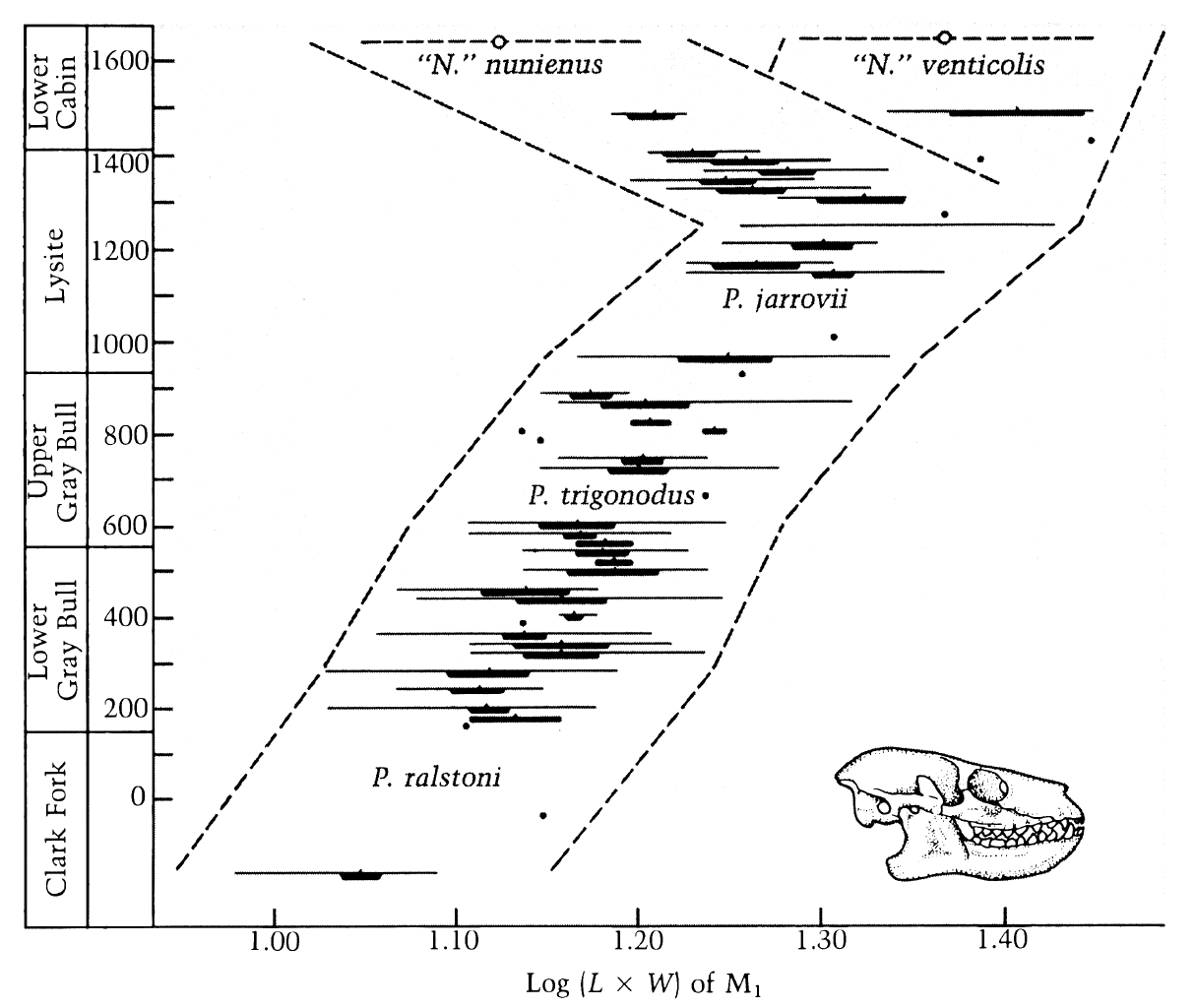 |
| Figure1 |
Adapiformes have sloping facets of their ankle bones and and characters of the distal tibia (presumably that link with the ankle features) that associate them with Lemuriformes (lemurs and lorises). They possess a post orbital bar, thus linking them with all other euprimates. Adapids had a dental formula of 2143 (early ones at least), lack a hypocone, have an elevated trigonid, and an unfused mandibular symphysis. Adapids have a petrosal bulla with a ring-like ectotypmanic included within the bulla (bullar morphology receives a lot of attention in primate systematics). In the cheiridia, adapiformes have opposable first digits for grasping. Their orbits are obliquely facing allowing for some stereoscopic vision and the lacrimal is included within the orbit. Their snouts are large and have lots of turbinates. Some workers have been able to pick out (in some specimens) boney features (such as a gap between the upper incisors) that might correlate with the wet-nosed' condition of modern strepsirrhines. Some have, in a heterodox position, listed a set of features thought to link adapiforms to anthropoids, in particular the cercamoniine adapiformes.
Adapiformes generally have mobile shoulder joints, which makes sense for active arboreal species.
Some notharctines were potentially vertical clingers and leapers, having short and high trochlea with the capitulum extending below the trochlea. For these potential VCL-ers, the elbow may not have allowed the forearm to fully extend, but the forearm may have had good twisting ability. Potentially arguing against the VCL hypothesis, none of the notharctines have knees like those of tarsiers and galagos, which are specialized leapers.
Adapines were different; they were possibly slow-climbing arboreal quadrupeds, agile but non-leapers. They were potentially loris like in their habits.
Diet
Some adapiforms have good zyogmatics and saggital crests suggesting more frugivorous or folivorous diets. The tiny Anchomys had insectivore-like teeth, and other small forms may also have been insectivorous. Most other species are over 1kg and were likey frugi/folivores. Covert (1986) found a high molar shearing coefficient (`spikiness' of teeth) for Adapis, Leptadapis, Notharctus, Caenopithecus, and Smilodectes (which are also larger adapiforms). The Sivaladapids also have folivorous molar shearing coefficients.
Climate
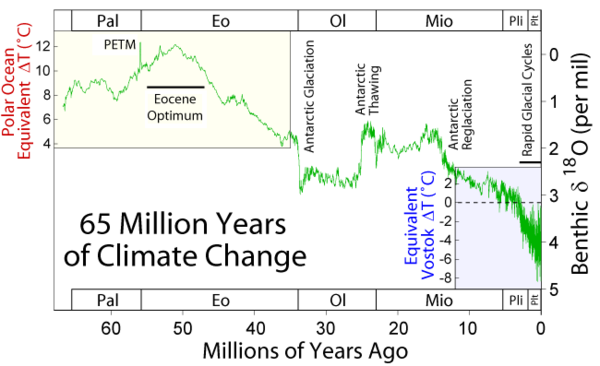 |
| Figure 2 |
Friday, July 26, 2013
Fantastic Bridges
This was pointed out to me by someone else, it's an odd glitch in google maps.

The map shows south Brooklyn. Manhattan Beach is on the east-end of a bit of land on the southern base of Brooklyn, with Coney Island at the west-end. The long strip at the bottom of the screen capture is a barrier island, made up of Breezy Point and the Rockaways. This map shows a bridge extending from Breezy Point into Manhattan Beach. There's no such bridge.

Here we're zoomed in on the north end of the 'bridge', and it actually is shown running into the CUNY Kingsborough Community College campus.
In fact a big chunk of the campus here is mysteriously shown as under water.
There's nothing like any of this in the satellite view, shown below.
Outside of this being a weird map rendering issue---and the error is not normally there, I've checked this map before---my first thought was, maybe it's a projection involving potential sea-level rise. But that wouldn't explain the "bridge", which is also rather wide for a bridge. Plus, the campus has a high sea-wall running all around it, so if the south end of it was flooded, the whole campus should be flooded. Water could be coming in to the west, off campus, and run into campus, but I'd think if that was the case then there'd be more flooding overall. Anyway, it's probably not the case that 'someone' at Google accidentally put in data from some imaginary flood scenario into the standard Google Map.

I actually wish this bridge did exist, it'd be better taking the Southern Parkway and driving through the Rockaways, and then over this bridge, than taking the dread Belt Parkway.

The map shows south Brooklyn. Manhattan Beach is on the east-end of a bit of land on the southern base of Brooklyn, with Coney Island at the west-end. The long strip at the bottom of the screen capture is a barrier island, made up of Breezy Point and the Rockaways. This map shows a bridge extending from Breezy Point into Manhattan Beach. There's no such bridge.

Here we're zoomed in on the north end of the 'bridge', and it actually is shown running into the CUNY Kingsborough Community College campus.
In fact a big chunk of the campus here is mysteriously shown as under water.
There's nothing like any of this in the satellite view, shown below.
Outside of this being a weird map rendering issue---and the error is not normally there, I've checked this map before---my first thought was, maybe it's a projection involving potential sea-level rise. But that wouldn't explain the "bridge", which is also rather wide for a bridge. Plus, the campus has a high sea-wall running all around it, so if the south end of it was flooded, the whole campus should be flooded. Water could be coming in to the west, off campus, and run into campus, but I'd think if that was the case then there'd be more flooding overall. Anyway, it's probably not the case that 'someone' at Google accidentally put in data from some imaginary flood scenario into the standard Google Map.

I actually wish this bridge did exist, it'd be better taking the Southern Parkway and driving through the Rockaways, and then over this bridge, than taking the dread Belt Parkway.
Tuesday, July 02, 2013
Colin Groves - Carl meets Karl: The case for testability in Primate Taxonomy
Dr. Colin Groves is a well known primatologist from the Australian National University. Amoung other things, he was one of the people who named Homo ergaster. His books include the textbook: Primate Evolution, 2001's Primate Taxonomy, and 2011's Ungulate Taxonomy. He's been called "primatology's latter-day Linnaeus" [Rosenberger 2009 (pdf)], which figures in the talk's topic.
The ~hour long talk---"Carl meets Karl: The case for testability in Primate Taxonomy"---was held at SUNY Stonybrook's Anatomic Sciences Seminar room (HSC T8-025) Monday July 1st at noon. Dr. Jungers did the introduction.
The two Carls are Linneaus and Popper, as might be guessed from the issues of testability and taxonomy.
Dr. Groves was making an argument for the use of the Phylogenetic Species Concept (PSC) in Primatology/Anthropology, in lieu of the Biological Species Concept (BSC). In brief, species concepts are attempts to define what we actually mean by species, which is no small task. Effectively there is no one universal species concept today, and debate on the issue can get quite heated.
The BSC defines a species as a population capable of interbreeding: if you have two populations that can't produce fertile offspring, you have two separate species. This is the species concept of highschool biology courses, but of course it was advocated by no less a figure than Ernst Mayr.
There are three different types of Phylogenetic Species Concepts (Wilkins, 2009) :
Groves says that the BSC is not testable because in most cases where we wonder "are these two species or one?", the populations have an allopatric distribution. They're geographically separated and there's no test of reproductive isolation. The BSC then falls outside the limits of Popper's demarcation criterion (that science must be testable). In the few instances where we can test inter-fertility (when the populations are in sympatry or the populations are housed together in, say, a zoo) interbreeding between putative good species often occurs, the BSC fails the test.
Groves explained that some good primate species, like Trachypithecus pileatus, have been shown to be hybrids (via Y-chromosome and mtDNA studies). He also showed a map of the distribution of baboon species across Africa, and then showed an African baboon mtDNA haplotype map, which broke up some of these species and, he said, gave evidence for hybridization between some species.
So, for Dr. Groves at least, the BSC is either unscientific (and thus should be rejected) or often falsified (and thus should be rejected).
Dr. Groves reviewed a few alternatives to the BSC, such as:
Groves defines the PSC as "the smallest population or aggregation of populations which has fixed, heritable differences from other such populations."
There are, apparently, many species of Mangebey (Cercocebus) monkeys, with different people sorting them differently. Groves performed a discriminant analysis which he claims showed absolute differences between the populations, and that thus each of these groups is a good, phylogenetic, trait-based species.
So Groves's major points is that the biological species concept at best fails when tested, and that the phylogenetic concept is more objective and testable; therefore anthropologists should explicitly use it.
In the brief question session, Groves was asked about what he meant by "fixed", he said he was talking about a binary 'yes/no short/long' difference between populations, but at the same time seemed to say that there was a good amount of wiggle room there.
Another important questions was: how far should someone take this method? Taxonomy & Systematics has long been divided over the 'lumper/splitter' issue. Groves rather strongly felt that the default should be that an operational taxonomic unit (OTU) is a species, and that one would need to demonstrably show that it was a subspecies otherwise.
So one thing to note here is that Groves is using the Autapomorphic "flavour" of the phylogenetic species concept, that a species is something that is 'diagnosable', and that species are the terminals of a cladogram. Some people treat this concept as meaning that the pattern of characters is real, but that pattern doesn't tell us anything about how the groups of species evolved. Thus there's a pattern vs process arguement amoung advocates of the Autapomorphic concept (and often this is called an problem of ontogeny-epistemology).
Wilkins (2009) reminds us of a case where workers had identified the species of seals and were now considering whether mtDNA haplotype data supported them. But under the PSC definition, each haplotype has to be considered a separate and distinct species. The authors in that study ended up resorting to biogeography and breeding data to justify their original choices of species, but that invalidates using the phylospecies concept in the first place.
This problem is taken to an extreme by Vrana & Wheeler (1992), who argue that the terminal taxa in a cladistic analysis should be individuals, not species. The only way to group individuals in a cladistic analysis (under this concept) would be if all members of the group were identical for all characters considered. Vrana & Wheeler also note that this would be a major problem for conservation biology, because the taxonomic units that people try to conserve aren't real.*
Groves believes that his usage of the PSC works in the modern day, and for any given 'slice' through paleontological/evolutionary time. But a problem here is highlighted by some of his listed antecedents. In the past, intermediate forms and slight gradations would connect what today are separate species with 'fixed' characters. So what's a species, based on morphology, today, somehow wasn't a species, based on the same morphology, in the past. Groves thus has, ironically, speciation by extinction.
A question actually came up for what Groves and the PSC means for paleontologists, since Groves was using soft-part anatomy (like pelt coloration) to mark new species. But it should be obvious that the PSC can be applied to paleo-species, it's just that the characters are going to be preservable ones. Of course, the major problem here is that a paleontologist today, and a hypothetical neotologist in the distant evolutionary past, would practically never identify the same species.
This all weakens the falsifiability claim that Groves makes for the PSC, the concept becomes extremely subjective in his rendering, much more so that, say, testing for reproductive isolation (the hallmark of the biological species concept).
Further, does the biological species concept really fail in the instances cited? In the case of two allopatrically separated 'obviously good' species that are brought into captivity, mate, and produce fertile offspring, what has been tested? A particular hypothesis (that there are two species) has been tested, and it failed, there's really one species in this scenario, according to the biological concept, which wasn't itself tested.
The existence of hybrids also is certainly not a new challenge to the BSC, plant species apparently easily hybridize, producing fertile offspring, in fact plant species can sort of self hybridize, they can fertilize themselves and instantly produce a new species with twice the chromosome number of the parental species.
Further, the phylospecies is distinguished from the morphospecies when the characters have undergone a cladistic analysis: that's how the autapomorphies are identified as such (as unique, derived traits specific to the group).
There was very little discussion of phylogeny in Groves talk and no cladistic analysis presented. Perhaps this is just because he was giving a condensed talk to a small group and he's explained this elsewhere.
The question over species concepts has been around for an extremely long time and isn't likely to be settled anytime soon. Coyne and Orr's [2004] recommendation that workers adopt a definition that best addresses their particular question is probably where the issue stands today, which isn't much help.
* Vrana & Wheeler continue by stating that, even if the 'species' isn't real, this could still mean, if a cladistic analysis reveals it, that there's structure within that 'species', and so a conservationist now has an argument for preserving each lineage within that, an appeal for preserving "cladistic diversity"
References
Coyne, J. A., & Orr, H. A. (2004). Speciation (p. 545). Sunderland, MA: Sinauer Associates.
Rosenberger, A.L. 2009. History of Primatology: The Alpha Taxonomist's View. Book review of: Extended Family: Long Lost Cousins. A Personal Look at the History of Primatology. Colin Groves. Arlington VA, Conservation International. Evolutionary Anthropology, 18: 79.
Wilkins, J. S. (2009). Defining species: a sourcebook from antiquity to today. American University Studies. Series V. Philosophy. Vol. 203. Peter Lang Publishers.
The ~hour long talk---"Carl meets Karl: The case for testability in Primate Taxonomy"---was held at SUNY Stonybrook's Anatomic Sciences Seminar room (HSC T8-025) Monday July 1st at noon. Dr. Jungers did the introduction.
The two Carls are Linneaus and Popper, as might be guessed from the issues of testability and taxonomy.
A little Background
Dr. Groves was making an argument for the use of the Phylogenetic Species Concept (PSC) in Primatology/Anthropology, in lieu of the Biological Species Concept (BSC). In brief, species concepts are attempts to define what we actually mean by species, which is no small task. Effectively there is no one universal species concept today, and debate on the issue can get quite heated.
The BSC defines a species as a population capable of interbreeding: if you have two populations that can't produce fertile offspring, you have two separate species. This is the species concept of highschool biology courses, but of course it was advocated by no less a figure than Ernst Mayr.
There are three different types of Phylogenetic Species Concepts (Wilkins, 2009) :
- Hennigian: species are unbroken & unbranched lineal segments of an evolutionary tree
- Phylogenetic Taxon: the smallest unit in a phylogenetic tree is the species
- Autapomorphic: species are set by diagnostic associations of unique characters
The bulk of the Talk
Groves says that the BSC is not testable because in most cases where we wonder "are these two species or one?", the populations have an allopatric distribution. They're geographically separated and there's no test of reproductive isolation. The BSC then falls outside the limits of Popper's demarcation criterion (that science must be testable). In the few instances where we can test inter-fertility (when the populations are in sympatry or the populations are housed together in, say, a zoo) interbreeding between putative good species often occurs, the BSC fails the test.
Groves explained that some good primate species, like Trachypithecus pileatus, have been shown to be hybrids (via Y-chromosome and mtDNA studies). He also showed a map of the distribution of baboon species across Africa, and then showed an African baboon mtDNA haplotype map, which broke up some of these species and, he said, gave evidence for hybridization between some species.
So, for Dr. Groves at least, the BSC is either unscientific (and thus should be rejected) or often falsified (and thus should be rejected).
Dr. Groves reviewed a few alternatives to the BSC, such as:
- Ghiselin 1996 - Species as individuals
- Van Valen's Ecological Species Concept
- Paterson's Recognition/Fertilization System Concept
- Templeton's Cohesion Species Concept
- Mayden's Genetic Distance Species Concept
Groves defines the PSC as "the smallest population or aggregation of populations which has fixed, heritable differences from other such populations."
There are, apparently, many species of Mangebey (Cercocebus) monkeys, with different people sorting them differently. Groves performed a discriminant analysis which he claims showed absolute differences between the populations, and that thus each of these groups is a good, phylogenetic, trait-based species.
So Groves's major points is that the biological species concept at best fails when tested, and that the phylogenetic concept is more objective and testable; therefore anthropologists should explicitly use it.
In the brief question session, Groves was asked about what he meant by "fixed", he said he was talking about a binary 'yes/no short/long' difference between populations, but at the same time seemed to say that there was a good amount of wiggle room there.
Another important questions was: how far should someone take this method? Taxonomy & Systematics has long been divided over the 'lumper/splitter' issue. Groves rather strongly felt that the default should be that an operational taxonomic unit (OTU) is a species, and that one would need to demonstrably show that it was a subspecies otherwise.
My reactions
So one thing to note here is that Groves is using the Autapomorphic "flavour" of the phylogenetic species concept, that a species is something that is 'diagnosable', and that species are the terminals of a cladogram. Some people treat this concept as meaning that the pattern of characters is real, but that pattern doesn't tell us anything about how the groups of species evolved. Thus there's a pattern vs process arguement amoung advocates of the Autapomorphic concept (and often this is called an problem of ontogeny-epistemology).
Wilkins (2009) reminds us of a case where workers had identified the species of seals and were now considering whether mtDNA haplotype data supported them. But under the PSC definition, each haplotype has to be considered a separate and distinct species. The authors in that study ended up resorting to biogeography and breeding data to justify their original choices of species, but that invalidates using the phylospecies concept in the first place.
This problem is taken to an extreme by Vrana & Wheeler (1992), who argue that the terminal taxa in a cladistic analysis should be individuals, not species. The only way to group individuals in a cladistic analysis (under this concept) would be if all members of the group were identical for all characters considered. Vrana & Wheeler also note that this would be a major problem for conservation biology, because the taxonomic units that people try to conserve aren't real.*
Groves believes that his usage of the PSC works in the modern day, and for any given 'slice' through paleontological/evolutionary time. But a problem here is highlighted by some of his listed antecedents. In the past, intermediate forms and slight gradations would connect what today are separate species with 'fixed' characters. So what's a species, based on morphology, today, somehow wasn't a species, based on the same morphology, in the past. Groves thus has, ironically, speciation by extinction.
A question actually came up for what Groves and the PSC means for paleontologists, since Groves was using soft-part anatomy (like pelt coloration) to mark new species. But it should be obvious that the PSC can be applied to paleo-species, it's just that the characters are going to be preservable ones. Of course, the major problem here is that a paleontologist today, and a hypothetical neotologist in the distant evolutionary past, would practically never identify the same species.
This all weakens the falsifiability claim that Groves makes for the PSC, the concept becomes extremely subjective in his rendering, much more so that, say, testing for reproductive isolation (the hallmark of the biological species concept).
Further, does the biological species concept really fail in the instances cited? In the case of two allopatrically separated 'obviously good' species that are brought into captivity, mate, and produce fertile offspring, what has been tested? A particular hypothesis (that there are two species) has been tested, and it failed, there's really one species in this scenario, according to the biological concept, which wasn't itself tested.
The existence of hybrids also is certainly not a new challenge to the BSC, plant species apparently easily hybridize, producing fertile offspring, in fact plant species can sort of self hybridize, they can fertilize themselves and instantly produce a new species with twice the chromosome number of the parental species.
Further, the phylospecies is distinguished from the morphospecies when the characters have undergone a cladistic analysis: that's how the autapomorphies are identified as such (as unique, derived traits specific to the group).
There was very little discussion of phylogeny in Groves talk and no cladistic analysis presented. Perhaps this is just because he was giving a condensed talk to a small group and he's explained this elsewhere.
The question over species concepts has been around for an extremely long time and isn't likely to be settled anytime soon. Coyne and Orr's [2004] recommendation that workers adopt a definition that best addresses their particular question is probably where the issue stands today, which isn't much help.
* Vrana & Wheeler continue by stating that, even if the 'species' isn't real, this could still mean, if a cladistic analysis reveals it, that there's structure within that 'species', and so a conservationist now has an argument for preserving each lineage within that, an appeal for preserving "cladistic diversity"
References
Coyne, J. A., & Orr, H. A. (2004). Speciation (p. 545). Sunderland, MA: Sinauer Associates.
Rosenberger, A.L. 2009. History of Primatology: The Alpha Taxonomist's View. Book review of: Extended Family: Long Lost Cousins. A Personal Look at the History of Primatology. Colin Groves. Arlington VA, Conservation International. Evolutionary Anthropology, 18: 79.
Wilkins, J. S. (2009). Defining species: a sourcebook from antiquity to today. American University Studies. Series V. Philosophy. Vol. 203. Peter Lang Publishers.
Monday, May 13, 2013
The Past as Prologue - Michael Mann
 |
| Penn State University Climatologist Michael Mann. After: Physicist and climatologist Michael Mann. Photograph: http://www.guardian.co.uk/environment/2012/mar/05/climate-change-hockey-stick-michael-mann |
Dr. Michael Mann is going to give a talk at the CUNY Graduate Center, Thursday May 9th. The talk will be on the 4th Floor in the Science Center, room 4102. This talk will start at 530pm. As usual, after the talk we'll have an informal reception.
Michael Mann is a well known climate researcher who's 1998 publication "Global-scale temperature patterns and climate forcing over the past six centuries" (pdf) is the source of the famous (well, famous as statistical graphs go) "Hockey Stick" graph.
 |
| A version of the "Hockey Stick Graph"., showing temperatures more or less stable for the past millenium, and then sharply spiking upwards in the modern era. After IPCC TAR WG1 (2001) Figure 5. |
The subject of the talk, however, is "The Past as Prologue". Dr. Mann will review work over the past decade aimed at establishing the nature of, and factors underlying, patterns of large-scale climate variability in past centuries. He will discuss evidence from proxy climate reconstructions spanning the past millennium, the comparison of proxy reconstructions with simulations with climate model simulations forced by past natural and anthropogenic forcing, and results from climate modeling experiments in which proxy evidence is assimilated directly into coupled ocean-atmosphere model simulations. He will also discuss recent work suggesting the possibility that equilibrium climate sensitivity may have been underestimated in some past studies comparing model simulations and paleoclimate reconstructions.
This will be a moderately technical talk, which is appropriate since the students that organize the GEOS talks as PhD candidates within the Earth & Environmental Sciences program. However, Dr. Mann has explained that he expects to talk about other issues related to his research. So non-academics are certainly welcome and can expect an exciting talk!
If you can't make it to the Grad Center for the talk, you can also check it out on our livestreaming channel:
Click here for a Flyer with more information (pdf)
(This entry is cross-posted at the GEOS group blog: http://opencuny.org/geos/?p=143)
(This entry is cross-posted at the GEOS group blog: http://opencuny.org/geos/?p=143)
Tuesday, February 19, 2013
Gould & Eldredge 1977 or G&E Strike Back
reading: Gould and Eldredge. 1977. Punctuated Equilibria: the tempo and mode of evolution reconsidered. Paleobiology. 3
I previously talked about an earlier paper where Eldredge and Gould put forward their concept of punctuated equilibria. This was a rather controversial concept at it's time. I think it's gone through the infamous 'stages of truth' series (which weirdly are tied up with Darwin's bulldog Huxley and famed embryologist von Baer as detailed here); first ridicule, then violent opposition, and then the claim that it's trivially and obviously true.
Or, as the claim was initially stated by Schopenhaur:
Gould and Eldredge's major gripe is that gradualism prevents examination of the tempo and mode of evolution, and that in particular gradualism can't be refuted by fossil evidence because the evidence has been heavily interpreted under the gradualistic framework. Punctuated Equilibria, they argue, allows for fair assessment of evolutionary tempos, and once we understand that we can make some inferences about the mode that evolution operates through. They state that if the tempo is punctuational, then the mode is 'speciation' or branching.
By "Tempo", G&E borrow from George Gaylord Simpson (a leader in the Modern Synthesis) and mean variation in rates of evolution between lineages, while "Mode" is the mechanism that produces the variation in rates.
Tempo, once the blinkering effect of gradualism can be removed, can be observed empirically, and punctuated equilibria is a mode that can be inferred from it. G&E feel that punctuated equilibria will be 'orders of magnitude' more important than phyletic gradualism, and that phyletic gradualism occurs 'hardly ever'. Importantly in this work, the fossil records sometimes failure to display radical morphological change, rather than being a 'failure to record' information is actual information, stasis, they reiterate is data. This is a necessary implication of applying the neontologist's allopatric speciation to the paleontologist's fossil record.
G&E also make it clear that they want two major changes to occur in the way paleontologists do their work (or rather did, since the initial paper on this topic was from more than 30 years ago); 1) evolutionary trends are the result of (higher level) species selection; and 2) workers need to quantitatively study the evolution of entire ecosystems and their members. They particularly want for workers to quantify geographic variation within a population and compare that to stratigraphic variation along and between lineages before anyone can really talk about stasis or punctuation (although they seem to relax that standard sometimes when people make claims of finding punctuation).
They then go through a number of studies that have supported or contra-indicated punctuated equilibria and tests for it, amoung them Stanley 1975 (pdf); Hecht 1974 (a longstanding and well-respected Chair of Biology at CUNY Queens College); Hayami & Ozawa 1975; Makurath & Anderson 1973; Gingerich 1974, 1976, 1977 (pdf); and Klapper & Johnson 1973 (whom they seem to paint as what I will call 'naive gradualists'). They also take to task workers who publish on evolutionary trends when all they really have are three data points, an original population, and then say one where the individuals are bigger on average, and then a third population where they're a little bigger again, on average. Trends really have to be based on many points, not just a few, G&E go through some basic statistics on why this is so.
G&E also look at a few cases where other authors have calculated the rates of gradualistic change, finding rates along the lines of 10% per million years. This means a fantastically small amount of change per year or per generation, which should just be wiped out by genetic drift. It also implies uninterupted multi-million year long selection pressures, which is terribly odd, and also seems to beg the question of why not select for more change over a shorter span of time?
Beyond this, G&E start trending into more controversial territory. They enter this territory by way of an opening analogy:
This is a messy idea, and a big problem is, what are G&E saying is actually going on? To continue with the above example, does the trend towards 'cold-types' happen because of differential reproductive success of some individuals within a population, or is it happening because of the success of the species as a whole? How do we distinguish selection for cold-type individuals against selection for cold-type species?
Also, in the above, and maybe this is just my misunderstanding, the overall environment doesn't need to get cold, the whole lineage can show a trend towards the 'cold-type' while the temperature across the overall range remains the same, the cold-types win out because there's always a bunch of them around and they can expand out of their limited allopatric range. Perhaps that'd be a good test for species selection, a non-adaptive trend that starts out as an adaptation to a local environment (this is the opposite of how Gould often talks about adaptations, with most current 'adaptations' starting off in a different functional context, or iow as 'exaptations', in his coinage).
G&E talk about their ideas about trends and species selection being a necessary/logical consequence of two things, 1) the occurence of punctuated equilibria (itself a logical consequence of allopatric speciation applied to the fossil record) and 2) that the morphology associated with a speciation event is random with respect to the direction of evolutionary trends within the group (their so-called "Wright's Rule").
G&E also wander a bit too closely to the line of '"explains everything" when it comes to punctuated equilibria also. They consider anagenesis to be simply the result of species selection over many, many splitting events (making it something like a trend). But anagenesis is most people's word for "phyletic gradualism". So they appear to be saying that punctuated equilibria can actually explain the very process that it's set up antithetically to, perhaps this dialectic 'negation of negation' is the Marxist-Hegelian spirit at work in Gould. Regardless, a theory that explains everything in the universe is a useless theory (consider the "godidit" idea, even contradicting evidence can be explained as "godidit"). Perhaps, similarly, a theory that can explain everything under it's ambit is a little too good (and by implication we're probably deceiving ourselves and the theory is ultimately wrong or more limited). Along these lines, G&E even claim that punctuated equilibria can now explain events below the species level, especially within asexual species; we already have a theory that explains those phenomena, it's the standard modern synthesis, there's no need to tack on punctuations.
G&E also step into what I think is unfamiliar territory for them, and they really step on it. Perhaps in the 70s it was debateble if they were right or wrong, but their idea that speciation occurs with a 'genetic revolution' (admittedly this is attributed back to Mayr), and that this revolution involves drastic re-structuring of the regulatory parts of the genome, is terribly wrong. When you start writing things like (and this is actually Carson 1975 that G&E are quoting):
you know you're in trouble: time to take a step back and re-evaluate (see here for a more sympathetic and fuller discussion).
G&E are particularly wedded to the idea that evolution occurs through variation in the tempo and mode of development, which is why Gould is so interested in heterochrony and paedomorphy. Perhaps Carson's statements were just too 'in line' and tempting with their thinking to prevent them from stepping into this topic. I just want to be clear, this issue of the genetics of speciation was a lively topic for a long period of time, there's nothing 'invalid' about it obviously, it just seems to me the G&E overstepped, widely, by taking a side on this issue in this paper.
G&E, despite getting some things very wrong, got a lot right. In particular, Figure 1 shows how they see punctuated equilibirum, with it's branching pattern of speciation (they call it a 'v' pattern and contrast it with what others call a 'y' patter). Figure 1 (Figure 8 in their paper) is basically what any phylogenetic tree looks like in modern papers today.
Compare this to Figure 2, from Klapper and Johnson 1975, a paper they examine in some detail (and showing the 'y' shapped pattern). Figure 2 is the sort you commonly see in older papers, you very rarely see a phylogenetic tree presented in this manner.
This is a minor point in some ways perhaps, but it illustrates that G&E were definitely on the right side with respect to branching and clades.
I previously talked about an earlier paper where Eldredge and Gould put forward their concept of punctuated equilibria. This was a rather controversial concept at it's time. I think it's gone through the infamous 'stages of truth' series (which weirdly are tied up with Darwin's bulldog Huxley and famed embryologist von Baer as detailed here); first ridicule, then violent opposition, and then the claim that it's trivially and obviously true.
Or, as the claim was initially stated by Schopenhaur:
Reading these papers you see a lot of work that seems trivially obvious today: allopatric speciation, local sections don't necessarily represent the wide ranging species, speciation is a process of branching, etc. But some other aspects of these papers haven't had their brief victory celebration yet (species selection and speciation through regulatory gene revolutions).
"To truth only a brief celebration of victory is allowed between the two long periods during which it is condemned as paradoxical, or disparaged as trivial."
Gould and Eldredge's major gripe is that gradualism prevents examination of the tempo and mode of evolution, and that in particular gradualism can't be refuted by fossil evidence because the evidence has been heavily interpreted under the gradualistic framework. Punctuated Equilibria, they argue, allows for fair assessment of evolutionary tempos, and once we understand that we can make some inferences about the mode that evolution operates through. They state that if the tempo is punctuational, then the mode is 'speciation' or branching.
By "Tempo", G&E borrow from George Gaylord Simpson (a leader in the Modern Synthesis) and mean variation in rates of evolution between lineages, while "Mode" is the mechanism that produces the variation in rates.
Tempo, once the blinkering effect of gradualism can be removed, can be observed empirically, and punctuated equilibria is a mode that can be inferred from it. G&E feel that punctuated equilibria will be 'orders of magnitude' more important than phyletic gradualism, and that phyletic gradualism occurs 'hardly ever'. Importantly in this work, the fossil records sometimes failure to display radical morphological change, rather than being a 'failure to record' information is actual information, stasis, they reiterate is data. This is a necessary implication of applying the neontologist's allopatric speciation to the paleontologist's fossil record.
G&E also make it clear that they want two major changes to occur in the way paleontologists do their work (or rather did, since the initial paper on this topic was from more than 30 years ago); 1) evolutionary trends are the result of (higher level) species selection; and 2) workers need to quantitatively study the evolution of entire ecosystems and their members. They particularly want for workers to quantify geographic variation within a population and compare that to stratigraphic variation along and between lineages before anyone can really talk about stasis or punctuation (although they seem to relax that standard sometimes when people make claims of finding punctuation).
They then go through a number of studies that have supported or contra-indicated punctuated equilibria and tests for it, amoung them Stanley 1975 (pdf); Hecht 1974 (a longstanding and well-respected Chair of Biology at CUNY Queens College); Hayami & Ozawa 1975; Makurath & Anderson 1973; Gingerich 1974, 1976, 1977 (pdf); and Klapper & Johnson 1973 (whom they seem to paint as what I will call 'naive gradualists'). They also take to task workers who publish on evolutionary trends when all they really have are three data points, an original population, and then say one where the individuals are bigger on average, and then a third population where they're a little bigger again, on average. Trends really have to be based on many points, not just a few, G&E go through some basic statistics on why this is so.
G&E also look at a few cases where other authors have calculated the rates of gradualistic change, finding rates along the lines of 10% per million years. This means a fantastically small amount of change per year or per generation, which should just be wiped out by genetic drift. It also implies uninterupted multi-million year long selection pressures, which is terribly odd, and also seems to beg the question of why not select for more change over a shorter span of time?
Speciation Theory
All of this is well and good and most workers today try to follow these recommendations, good papers carry them out fully, examining entire faunas, gathering solid data for statistical analysis, paying attention to stratigraphy, etc, and really great papers make explicit statements about null & multiple working hypotheses and put their theoretical assumptions up front.Beyond this, G&E start trending into more controversial territory. They enter this territory by way of an opening analogy:
"speciation is the raw material of macroevolution, and genetic substitution within populations cannot be simply extrapolated [into macroevolution] [...] We therfore challenged [that] change in gene frequency within populations is hte building block of major evolutionary events"Species selection/species sorting is selection at a heirachical level higher than the cannonical individual, it is something that is still strongly debated today. As they presented it here and in their 1972 paper, marginal species randomly enter peripheral environments. These sub-populations respond especially well to their surroundings in some types of peripheral environments. From this, an overall effect arises, a trend. Lets say a population is exposed to cold conditions at multiple points (and even at many times) along the edge of it's range, and that this species always tends to strongly react to 'cold' by forming thicker fur, bulkier body-types, etc. This means that, of the varieties of this species that are out there, a bunch of them are going to be cold-adapted, and over geologic time-scales, you're often going to have cold-adapted sub-types pop up. There's a good chance that the cold-adapted subtype, simply by the numbers, and through the actions following allopatric speciation, will tend to be successful and replace it's parent variety/sub-species/species. And this process repeats. The "net effect" is a trend in body-type, fur, etc.
This is a messy idea, and a big problem is, what are G&E saying is actually going on? To continue with the above example, does the trend towards 'cold-types' happen because of differential reproductive success of some individuals within a population, or is it happening because of the success of the species as a whole? How do we distinguish selection for cold-type individuals against selection for cold-type species?
Also, in the above, and maybe this is just my misunderstanding, the overall environment doesn't need to get cold, the whole lineage can show a trend towards the 'cold-type' while the temperature across the overall range remains the same, the cold-types win out because there's always a bunch of them around and they can expand out of their limited allopatric range. Perhaps that'd be a good test for species selection, a non-adaptive trend that starts out as an adaptation to a local environment (this is the opposite of how Gould often talks about adaptations, with most current 'adaptations' starting off in a different functional context, or iow as 'exaptations', in his coinage).
G&E talk about their ideas about trends and species selection being a necessary/logical consequence of two things, 1) the occurence of punctuated equilibria (itself a logical consequence of allopatric speciation applied to the fossil record) and 2) that the morphology associated with a speciation event is random with respect to the direction of evolutionary trends within the group (their so-called "Wright's Rule").
G&E also wander a bit too closely to the line of '"explains everything" when it comes to punctuated equilibria also. They consider anagenesis to be simply the result of species selection over many, many splitting events (making it something like a trend). But anagenesis is most people's word for "phyletic gradualism". So they appear to be saying that punctuated equilibria can actually explain the very process that it's set up antithetically to, perhaps this dialectic 'negation of negation' is the Marxist-Hegelian spirit at work in Gould. Regardless, a theory that explains everything in the universe is a useless theory (consider the "godidit" idea, even contradicting evidence can be explained as "godidit"). Perhaps, similarly, a theory that can explain everything under it's ambit is a little too good (and by implication we're probably deceiving ourselves and the theory is ultimately wrong or more limited). Along these lines, G&E even claim that punctuated equilibria can now explain events below the species level, especially within asexual species; we already have a theory that explains those phenomena, it's the standard modern synthesis, there's no need to tack on punctuations.
G&E also step into what I think is unfamiliar territory for them, and they really step on it. Perhaps in the 70s it was debateble if they were right or wrong, but their idea that speciation occurs with a 'genetic revolution' (admittedly this is attributed back to Mayr), and that this revolution involves drastic re-structuring of the regulatory parts of the genome, is terribly wrong. When you start writing things like (and this is actually Carson 1975 that G&E are quoting):
 |
| No, not that Carson |
"Speciation is considered to be initiated when an unusual forced reorganization of the epistatic supergenes of the closed variability system occurs"
you know you're in trouble: time to take a step back and re-evaluate (see here for a more sympathetic and fuller discussion).
G&E are particularly wedded to the idea that evolution occurs through variation in the tempo and mode of development, which is why Gould is so interested in heterochrony and paedomorphy. Perhaps Carson's statements were just too 'in line' and tempting with their thinking to prevent them from stepping into this topic. I just want to be clear, this issue of the genetics of speciation was a lively topic for a long period of time, there's nothing 'invalid' about it obviously, it just seems to me the G&E overstepped, widely, by taking a side on this issue in this paper.
G&E, despite getting some things very wrong, got a lot right. In particular, Figure 1 shows how they see punctuated equilibirum, with it's branching pattern of speciation (they call it a 'v' pattern and contrast it with what others call a 'y' patter). Figure 1 (Figure 8 in their paper) is basically what any phylogenetic tree looks like in modern papers today.
 |
| Figure 1 |
 |
| Figure 2 |
This is a minor point in some ways perhaps, but it illustrates that G&E were definitely on the right side with respect to branching and clades.
Sunday, February 17, 2013
On Punctuated Equilibria
Reading Eldridge and Gould, 1972. Punctuated Equilibria: An alternative to Phyletic Gradualism. in Schopf (ed) Models in Paleobiolgoy. Freeman, Cooper, & Co.
E&G begin by noting that research is not conducted in a vacuum and that we don't observe data with a "viewpoint from nowhere": we use theory to organize and interpret data. they call this a "picture" rather than a paradigm/research programme/etc, explicitly trying to avoid the longstanding debate over those terms.
Stepping off from this, they claim that most paleontologists hold a conceptual picture of evolution walking along with slow and small steps; they term this "phyletic gradualism" and link it with sympatric speciation. Importantly they feel that paleontologists haven't been keeping up with the mainstream of population biology, where allopatric speciation is (or at least was in the '70s when the paper was written) was all the rage.
So with that hypothetical apparatus in mind (that "picture" influences theory and paleos currently work under a gradualist picture), they consider how allopatric speciation would look in the fossil record. E&G look at two fossil groups and attempt to establish that the data can be explained, and can possibly be more "interestingly" explained, under the allopatric model.
First they consider Poecilozonites, a genus of pulmonate snails from Bermuda. Using different pictures, they can argue in support of allo- or sympatric speciation. The species under consideration are all subspecies of P. bermudensis that are marked in being paedomorphic; the adults retain juvenile features. A story of gradual cumulative change can be laid out, but when you start including geographic information, more support is seen for allopatry.
Second they review Phacops rana and related trilobite species from Devonian New York--Ohio strata. In particular the discussion focuses on changes in one 'character' (although it's a complex character with many related components, as the
authors point out), the number of "dorso-ventral files" in the eye. They find that the mainline species has 18 of these eye-files, and argue that marginal populations arise with variable number of eye-files. These marginal peripheral populations then expand/migrate, overtaking the mainline. This is the allopatric model in essence. In each case of these triblobites there's a reduction of the number of files in the eye (see Figure 1).
I don't really know anything about the eyes of trilobites, other than that they're complex/compound and insect-like, but are not related to insect eyes. Eyes are fascinating structures, famously Darwin seemed to waiver that natural selection could produce something so complex, and who's function seems so reliant on the interdependence of parts. But of course Darwin immediately recognized that the eye could evolve in stages, and he even cited some fossil examples of probable stage. In fact, one would think that that was a lucky accident and that eyes turned up once in a primitive ancestor and have been inherited by all eyed organisms today-- or maybe they evolved twice, one for organisms with eyes 'like ours' and one for compound eye type organisms). But that's not the case, eyes of various sorts have independently evolved many times amoung animals, up to 100 times.
The only other thing I know about trilobite eyes is that their lenses are made of calcite, a mineral. Our eyes lenses are nothing like this, they contain crystallin, which is a protein, not a mineral (despite what its name might suggest to some) and our lenses are metabolically active.
So this business of "dorsoventral" whatever seemed like it was worth looking into. Trilobite eyes are compound, similar to an insect's, but independently evolved (they're possibly the oldest eyes we have on record). Each facet is made up of a small calcite lens (and other tissues), and a string of lenses is what E&G is referring to as a "dorso-ventral file". There's more to the eye, with the visual unit, capped by a lens, being called an ommatidia. Lines of lenses that run between the dorsal and ventral surface of an eye are called d-v files, and lines of lenses that run horizontally across an eye are simply called rows. The number of files is used in the determination of species within trilobites.
Interestingly, the some of the specimens referred to by E&G are from the Marcellus Shale in NY (a source of hydrofraked natural gas).
E&G go on to state that there's an expectation amoung paleontologists that successively higher taxonomic ranks should have progressively more and more taxa within it, they believe this incorrect assumption is a result of the "picture" of phyletic gradualism; as time goes on more and more species are produced. The reality is that there are, infamously, lots of higher ranks that are species poor, so we in some families there are hundreds of genera each containing dozens of species and good sub-species, but often enough we can have Orders with a few monotypic genera. Allopatric speciation can explain this as repeated splitting with either 1) the parent species going extinct and only marginal ones surviving; 2) when geographic isolates adapt through new modes of feeding/motion/protection/etc; and 3) when it involves a small isolated lineage.
Finally E&G address that exemplar of phyletic gradualism, the evolution of long-term (and especially adaptive) trends in a lineage. They feel that allopatry can result in the appearance of a trend by way of analogy to how random mutation in a population can still result in the overall production of a trend within that population. Selection pressure moves the population in one direction, and something that would eventually become called "species sorting", IIRC, similarly produces the trend at a higher level. They point out a mechanism in a little more detail, relying on something like the genetic and historical constraints of the mainline species tending to result in marginal species reacting strongly and in the same way to particular to similar marginal environments--say, developing thick skin in desert environments; the net effect is an overall trend for the group of species.
You can see a lot of anticipations of Gould's later work on hierarchical levels of evolution in this work, along with some material that, probably through uncharitable readings, was used to charge Eldridge and Gould with being monstrous saltationists.
I have to wonder at some of their examples though and if they really show a signal of allopatry. With Phacops, we see a few marginal populations developing, in these cases through paedomorphosis, in different locations and then expanding over the ancestral range. E&G note that the mainline population is invariant, with 18 d-v files, while the marginals are at first more variable, and then later less variable with a reduced number of d-v files. But why isn't this just a large, general population with variability in the number of d-v files, why consider the variable population to be an isolate? If you look at any one slice through time, you find a wide-spanning population with variable d-v file numbers, some living in epeiric seas, other in marginal seas, which aren't terribly different environments either.
Figure 3 show populations (marked with red lines) with 1) 18--17 d-v files; 2) only 17 d-v files; and 3) 15--17 d-v files. Further, the green line in Figure 3 shows that in epeiric seas as you move through time the number of d-v files changes 18 to 17 to 15, a trend of reduction in this group at this location. The authors posit that migration has occurred not evolution in place over a long period of time.
Obviously the justification for allopatry must be in Eldrige's (and others) stratigraphic and geographic work on the group, but it'd be more helpful to have some discussion of that.
One other thing that really sticks out in this work is that E&G are heavily operating within the adaptationist programme, ironic given that Gould is such a critic of that. Whether they're considering allopatry or sympatry, they can find adaptationist explanations for all the features. Perhaps shells became thinner as an adaptation to living in limey soil, or perhaps that was just the result of drift, a meaningless fixation. It's hard to believe that you can have a wide ranging population of Phacops trilobites with something like the structure of the eye varying so much, and that this is the result of selection pressure for the number of d-v files, rather than just meaningless variability in their number. Eldridge, and others, promoted the idea of identifying species within the trilobites by counting (presumably amoung other things) the number of dorso-ventral lines. Perhaps that 'picture' of trilobite evolution coloured his ideas here.
E&G begin by noting that research is not conducted in a vacuum and that we don't observe data with a "viewpoint from nowhere": we use theory to organize and interpret data. they call this a "picture" rather than a paradigm/research programme/etc, explicitly trying to avoid the longstanding debate over those terms.
Stepping off from this, they claim that most paleontologists hold a conceptual picture of evolution walking along with slow and small steps; they term this "phyletic gradualism" and link it with sympatric speciation. Importantly they feel that paleontologists haven't been keeping up with the mainstream of population biology, where allopatric speciation is (or at least was in the '70s when the paper was written) was all the rage.
So with that hypothetical apparatus in mind (that "picture" influences theory and paleos currently work under a gradualist picture), they consider how allopatric speciation would look in the fossil record. E&G look at two fossil groups and attempt to establish that the data can be explained, and can possibly be more "interestingly" explained, under the allopatric model.
First they consider Poecilozonites, a genus of pulmonate snails from Bermuda. Using different pictures, they can argue in support of allo- or sympatric speciation. The species under consideration are all subspecies of P. bermudensis that are marked in being paedomorphic; the adults retain juvenile features. A story of gradual cumulative change can be laid out, but when you start including geographic information, more support is seen for allopatry.
Second they review Phacops rana and related trilobite species from Devonian New York--Ohio strata. In particular the discussion focuses on changes in one 'character' (although it's a complex character with many related components, as the
authors point out), the number of "dorso-ventral files" in the eye. They find that the mainline species has 18 of these eye-files, and argue that marginal populations arise with variable number of eye-files. These marginal peripheral populations then expand/migrate, overtaking the mainline. This is the allopatric model in essence. In each case of these triblobites there's a reduction of the number of files in the eye (see Figure 1).
 |
| Figure 1 - Hypothetical Phylogeny |
I don't really know anything about the eyes of trilobites, other than that they're complex/compound and insect-like, but are not related to insect eyes. Eyes are fascinating structures, famously Darwin seemed to waiver that natural selection could produce something so complex, and who's function seems so reliant on the interdependence of parts. But of course Darwin immediately recognized that the eye could evolve in stages, and he even cited some fossil examples of probable stage. In fact, one would think that that was a lucky accident and that eyes turned up once in a primitive ancestor and have been inherited by all eyed organisms today-- or maybe they evolved twice, one for organisms with eyes 'like ours' and one for compound eye type organisms). But that's not the case, eyes of various sorts have independently evolved many times amoung animals, up to 100 times.
The only other thing I know about trilobite eyes is that their lenses are made of calcite, a mineral. Our eyes lenses are nothing like this, they contain crystallin, which is a protein, not a mineral (despite what its name might suggest to some) and our lenses are metabolically active.
So this business of "dorsoventral" whatever seemed like it was worth looking into. Trilobite eyes are compound, similar to an insect's, but independently evolved (they're possibly the oldest eyes we have on record). Each facet is made up of a small calcite lens (and other tissues), and a string of lenses is what E&G is referring to as a "dorso-ventral file". There's more to the eye, with the visual unit, capped by a lens, being called an ommatidia. Lines of lenses that run between the dorsal and ventral surface of an eye are called d-v files, and lines of lenses that run horizontally across an eye are simply called rows. The number of files is used in the determination of species within trilobites.
 |
| Figure 2 - Trilobite eye structure |
Interestingly, the some of the specimens referred to by E&G are from the Marcellus Shale in NY (a source of hydrofraked natural gas).
E&G go on to state that there's an expectation amoung paleontologists that successively higher taxonomic ranks should have progressively more and more taxa within it, they believe this incorrect assumption is a result of the "picture" of phyletic gradualism; as time goes on more and more species are produced. The reality is that there are, infamously, lots of higher ranks that are species poor, so we in some families there are hundreds of genera each containing dozens of species and good sub-species, but often enough we can have Orders with a few monotypic genera. Allopatric speciation can explain this as repeated splitting with either 1) the parent species going extinct and only marginal ones surviving; 2) when geographic isolates adapt through new modes of feeding/motion/protection/etc; and 3) when it involves a small isolated lineage.
Finally E&G address that exemplar of phyletic gradualism, the evolution of long-term (and especially adaptive) trends in a lineage. They feel that allopatry can result in the appearance of a trend by way of analogy to how random mutation in a population can still result in the overall production of a trend within that population. Selection pressure moves the population in one direction, and something that would eventually become called "species sorting", IIRC, similarly produces the trend at a higher level. They point out a mechanism in a little more detail, relying on something like the genetic and historical constraints of the mainline species tending to result in marginal species reacting strongly and in the same way to particular to similar marginal environments--say, developing thick skin in desert environments; the net effect is an overall trend for the group of species.
You can see a lot of anticipations of Gould's later work on hierarchical levels of evolution in this work, along with some material that, probably through uncharitable readings, was used to charge Eldridge and Gould with being monstrous saltationists.
I have to wonder at some of their examples though and if they really show a signal of allopatry. With Phacops, we see a few marginal populations developing, in these cases through paedomorphosis, in different locations and then expanding over the ancestral range. E&G note that the mainline population is invariant, with 18 d-v files, while the marginals are at first more variable, and then later less variable with a reduced number of d-v files. But why isn't this just a large, general population with variability in the number of d-v files, why consider the variable population to be an isolate? If you look at any one slice through time, you find a wide-spanning population with variable d-v file numbers, some living in epeiric seas, other in marginal seas, which aren't terribly different environments either.
 |
| Figure 3 - Some notes on the hypothetical Trilobite phylogeny. Red lines 1--3 are samples at a particular time, the green arrow is a possible trendline. |
Figure 3 show populations (marked with red lines) with 1) 18--17 d-v files; 2) only 17 d-v files; and 3) 15--17 d-v files. Further, the green line in Figure 3 shows that in epeiric seas as you move through time the number of d-v files changes 18 to 17 to 15, a trend of reduction in this group at this location. The authors posit that migration has occurred not evolution in place over a long period of time.
Obviously the justification for allopatry must be in Eldrige's (and others) stratigraphic and geographic work on the group, but it'd be more helpful to have some discussion of that.
One other thing that really sticks out in this work is that E&G are heavily operating within the adaptationist programme, ironic given that Gould is such a critic of that. Whether they're considering allopatry or sympatry, they can find adaptationist explanations for all the features. Perhaps shells became thinner as an adaptation to living in limey soil, or perhaps that was just the result of drift, a meaningless fixation. It's hard to believe that you can have a wide ranging population of Phacops trilobites with something like the structure of the eye varying so much, and that this is the result of selection pressure for the number of d-v files, rather than just meaningless variability in their number. Eldridge, and others, promoted the idea of identifying species within the trilobites by counting (presumably amoung other things) the number of dorso-ventral lines. Perhaps that 'picture' of trilobite evolution coloured his ideas here.
Friday, October 05, 2012
Disinteresting Star Trek Conventions
Reading: Dear, Peter. 2001 Science Studies as Epistemography. in The One Culture, A Conversation about Science. Labinger & Collins, Eds.
This essay makes the point that Science Studies needs to be disinterested, by which the author means 'not interested in the scientific truth of the matter under study'. If the researcher used normal scientific methodology in order to study his subject, he'd be introducing an 'interest' that could bias the results.
But the problem with this is that the scientific truth of the matter at hand is relevant to the study of science, to the history of science, and why certain theories are accepted while others are not.
In Science Fiction, the reader is asked to suspend disbelief over a few technical issues in order to provide the setting and backdrop against which the story takes place. This, by way of analogy, is like Dear's disinterest. But there is a major problem with this type of disinterest and suspension of disbelief: it's one thing to think about Warp Drives and allow them to exist in order to be entertained and educated by the stories in Star Trek, it's quite another thing to actually go around believing that, yes, Warp Drive does exist. While that belief might seem insane to most people, there is a tendency amoung Trekkies to in fact believe that the Science of Star Trek is real science, or a likely and reasonable projection of what science will be like in the future; it's not science today, so we need to suspend our disbelief in that sense, but one day it will most likely come to fruition, it's believable.
Given that this tendency or trend exists (and competes with a similar trend to realize that Star Trek is not about real science), what is the better way to analyze and critique Star Trek? Based on it's literary value or on it's scientific accuracy? Surely most would agree that literary criticism of Star Trek is more sensible than Scientific criticism. And so, by analogy, it might seem that criticism/evaluation/analysis of science should "stand-off" from the truth, that scientific accuracy shouldn't be a criteria through which we analyze the social development of a scientific research program.
But that's wrong, the analogy fails, because Star Trek is literature, it's not the truth and doesn't claim to be scientific. The truth of scientific correctness of a research program or theory is very much a part of the how and why it's successful. The truth of a sci-fi story is not, in fact in a way it's explicitly not, a part of why the story is successful.
Scientists don't just happen to stumble on the truth, the scientific enterprise (see what I did there) builds upon previous successes in order to achieve more success: science progresses. Maybe not in straight lines, and certainly not inevitably, science does form columns and march right into progress, but, nonetheless, it does progress. So it's grossly inadequate to evaluate science from a sociological perspective without taking into account the scientific correctness of the theory, research program, or even researcher, under study.
Clearly there are other influences. Going back to the Sci-Fi analogy, IF you ask the audience to suspend disbelief too much, then at the very least you cross genres and end up in Science Fantasy Land, where hobbits have ray guns, and that's just plain stupid.
In Science, researchers are supposed to,of course, be disinterested; they're supposed to not be interested in one particular theory over another because it's more popular; it's what their lab director has a research program in; or because it's what the government is providing funding for--a literary critic of Star Trek isn't supposed to be interested in, say, the Romulans coming out on top, and if that doesn't happen well dammit the story was flawed! A science fiction critic is supposed to be interested in the story. A scientific researcher is not supposed to be disinterested in the truth.
This essay makes the point that Science Studies needs to be disinterested, by which the author means 'not interested in the scientific truth of the matter under study'. If the researcher used normal scientific methodology in order to study his subject, he'd be introducing an 'interest' that could bias the results.
But the problem with this is that the scientific truth of the matter at hand is relevant to the study of science, to the history of science, and why certain theories are accepted while others are not.
In Science Fiction, the reader is asked to suspend disbelief over a few technical issues in order to provide the setting and backdrop against which the story takes place. This, by way of analogy, is like Dear's disinterest. But there is a major problem with this type of disinterest and suspension of disbelief: it's one thing to think about Warp Drives and allow them to exist in order to be entertained and educated by the stories in Star Trek, it's quite another thing to actually go around believing that, yes, Warp Drive does exist. While that belief might seem insane to most people, there is a tendency amoung Trekkies to in fact believe that the Science of Star Trek is real science, or a likely and reasonable projection of what science will be like in the future; it's not science today, so we need to suspend our disbelief in that sense, but one day it will most likely come to fruition, it's believable.
 |
| A Star Trek Technical Manual, yes, that's "a" manual, there are several and they'll explain the physics and engineering challenges involved in incorporating the Bussard Ramscoop into the Warp Nacelle, or that a Nanocochrane is a billionth of a Cochrane, itself a measure of the subspace field stress. |
Given that this tendency or trend exists (and competes with a similar trend to realize that Star Trek is not about real science), what is the better way to analyze and critique Star Trek? Based on it's literary value or on it's scientific accuracy? Surely most would agree that literary criticism of Star Trek is more sensible than Scientific criticism. And so, by analogy, it might seem that criticism/evaluation/analysis of science should "stand-off" from the truth, that scientific accuracy shouldn't be a criteria through which we analyze the social development of a scientific research program.
But that's wrong, the analogy fails, because Star Trek is literature, it's not the truth and doesn't claim to be scientific. The truth of scientific correctness of a research program or theory is very much a part of the how and why it's successful. The truth of a sci-fi story is not, in fact in a way it's explicitly not, a part of why the story is successful.
Scientists don't just happen to stumble on the truth, the scientific enterprise (see what I did there) builds upon previous successes in order to achieve more success: science progresses. Maybe not in straight lines, and certainly not inevitably, science does form columns and march right into progress, but, nonetheless, it does progress. So it's grossly inadequate to evaluate science from a sociological perspective without taking into account the scientific correctness of the theory, research program, or even researcher, under study.
Clearly there are other influences. Going back to the Sci-Fi analogy, IF you ask the audience to suspend disbelief too much, then at the very least you cross genres and end up in Science Fantasy Land, where hobbits have ray guns, and that's just plain stupid.
 |
| No Comment on either. |
In the sociology of science, there is a tendency to reject experiment and empiricism, largely because of conventionalism: explaining experimental failures through auxiliary theories that represent an ad hoc defense of the core theory. Philosophers of science like Karl Popper insist that we make a "bold" decision to refrain from conventionalism (and also to design experiments that test our theories where they'd be the weakest, to try to disprove our theories rather than merely confirm them). This has a parallel in science fiction. The science of Star Trek has been laid out in books and articles and is moderately well established; you can argue about the results of hypothetical actions in the Star Trek universe, and arrive at canonically consistent results (whereas you can't do this in the Dr. Who universe, because time is merely all wibbly wobbly). Star Trek Conventionalists can criticize a Star Trek story if, say, it involves ship speeds greater than Warp 10. If there's a story where this happens, we know that this is not allowed by the fictionalized science, and so some other explanation has to be offered, or instead we could say that a story must stay within the conventions of Star Trek (not to be confused with Star Trek Conventions of course). Popper wants us to avoid that kind of conventionalism and to make what's arguably a quantum leap: that a theory which hasn't technically been completely falsified, should nonetheless be discarded, and we should move on to another. If you do that in Star Trek, what you get are arguable disasters like Enterprise or Andromeda (as far beyond Star Trek as Trek was beyond Today).
 |
Actor Scott Bakula, playing Dr. Sam
Beckett playing Capt Jonathan Archer,
who's hoping that his next leap will
be his leap home.
|
In Science, researchers are supposed to,of course, be disinterested; they're supposed to not be interested in one particular theory over another because it's more popular; it's what their lab director has a research program in; or because it's what the government is providing funding for--a literary critic of Star Trek isn't supposed to be interested in, say, the Romulans coming out on top, and if that doesn't happen well dammit the story was flawed! A science fiction critic is supposed to be interested in the story. A scientific researcher is not supposed to be disinterested in the truth.